
Signs of Pests in Detroit Homes and What They Mean
Match what you’re noticing to its likely cause, how soon it needs attention and the service that deals with it.
Most people notice the signs long before they see the pest. Mice stay hidden in the walls, bed bugs feed while you sleep, and a wasp nest can grow for weeks behind a gutter before anyone looks up. Each pest leaves its own kind of evidence, though, and once you know what to look for, most signs point fairly clearly to one cause.
What You Notice and What It Usually Means
Start with the sign you noticed first. The urgency is a rough guide to how soon it needs attention, not a diagnosis: a sign marked Soon can become urgent if it spreads into the kitchen or a child’s room.
| What you notice | The likely cause | How urgent it is | The service that fixes it |
|---|---|---|---|
| Scratching or scurrying inside the walls or ceiling at night | Mice, or rats in larger spaces | Soon | Rodent Control |
| Small dark droppings in a kitchen drawer or the pantry | Mice feeding where food is kept | Urgent | Rodent Control |
| Gnawed door frames, food packaging or wiring | Mice or rats; chewed wiring is a fire risk | Urgent | Rodent Control |
| Dark, greasy smudges along a wall or a beam | Rub marks from mice or rats using the same path | Soon | Rodent Control |
| A sharp, ammonia-like smell in a closet or the basement | Mouse urine where mice are nesting | Soon | Rodent Control |
| A rotten smell coming from one wall or ceiling | A rodent that died inside the wall | Soon | Rodent Control |
| Itchy welts in a line or a cluster after sleeping | Possibly bed bugs; bites alone can’t confirm them | Soon | Bed Bug Treatment |
| Rusty or dark spots on the sheets or the mattress seams | Bed bugs | Soon | Bed Bug Treatment |
| A steady line of ants crossing the counter or the floor | Ants following a scent trail to food or water | Soon | Cockroach and Ant Control |
| A few ants on a window sill in spring | Ants scouting from a nest outdoors | Can wait | Cockroach and Ant Control |
| A cockroach out in the open during the day | A large roach population crowded out of hiding | Urgent | Cockroach and Ant Control |
| A musty, oily smell inside a kitchen cabinet | A heavy cockroach population | Soon | Cockroach and Ant Control |
| Spider webs that come back within days | Spiders feeding on other insects nearby | Can wait | Cockroach and Ant Control |
| A paper nest by a door, a porch or a play area | Paper wasps, yellowjackets or hornets | Urgent | Wasp and Hornet Removal |
| Wasps flying in and out of a gap in the siding | A nest inside the wall or the roof space | Soon | Wasp and Hornet Removal |
Tick What You’ve Found
Tick everything you’ve noticed, even the signs that seem unrelated. They often turn out to be connected.
Tick the signs you’ve noticed, then press Show What It Might Be.
Urgent, Soon or Can Wait
Urgency comes down to two questions: could someone get hurt or sick, and is the damage happening right now?
Reading Droppings, Gnaw Marks and Smells
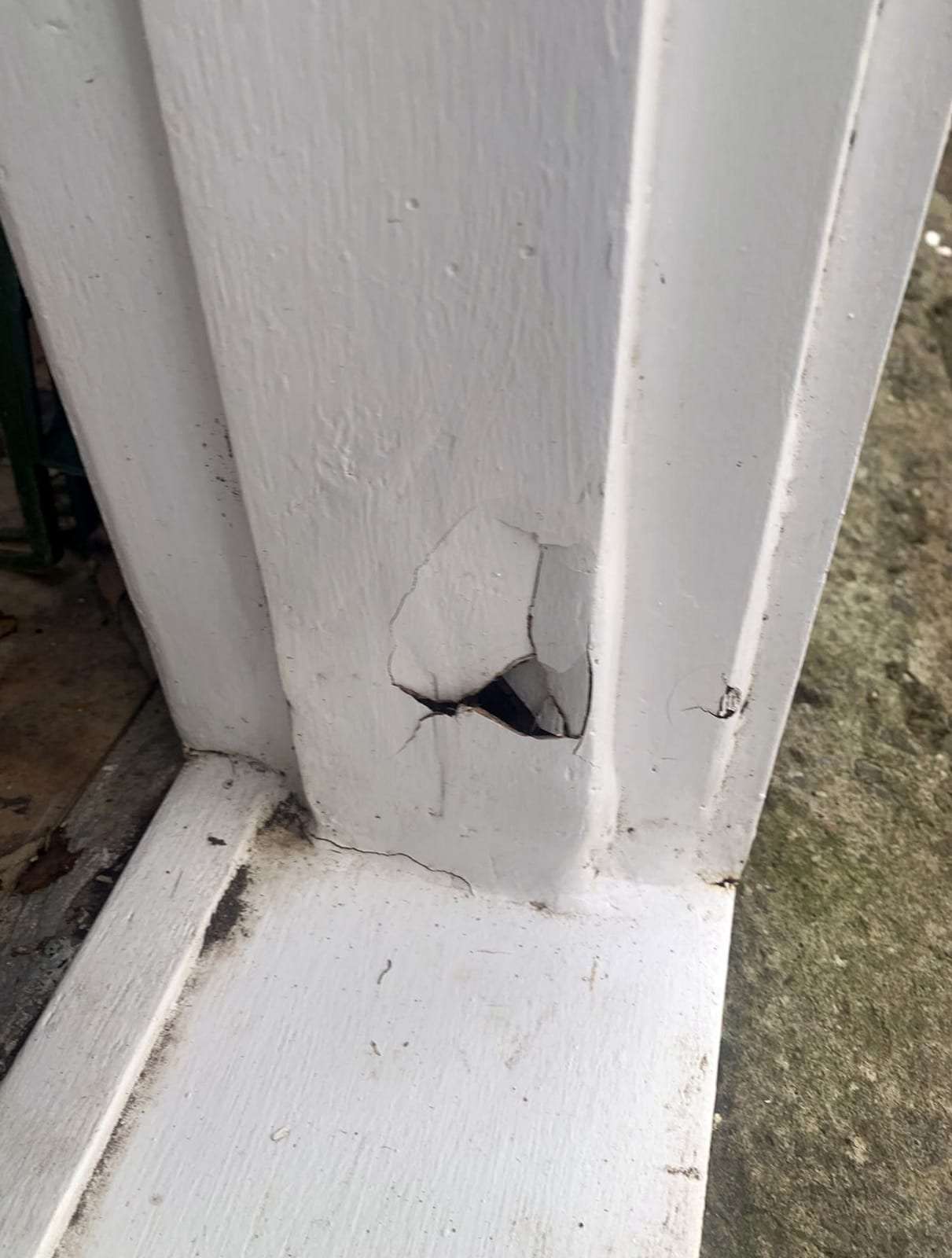
Gnaw marks are one of the clearest rodent signs. Mice leave small, neat grooves; rats leave larger, rougher ones and can chew through soft wood and plastic. Fresh gnawing looks pale and sharp-edged, while old marks darken with time, which tells you whether the damage is new. Look low on door frames, baseboards and cabinet corners, and around food packaging in the pantry.
Droppings tell you even more. Mouse droppings are small and dark with pointed ends, about the size of a grain of rice, and rat droppings are larger and blunter. Cockroach droppings look like ground pepper or coffee grounds, often around cabinet hinges, and bed bugs leave rusty or black spots that soak into fabric like ink from a marker. Don’t sweep rodent droppings up dry; dampen them with a disinfectant first and wear gloves.
Smells are the last clue. A sharp, ammonia-like smell points to mouse urine where they’ve been nesting, a musty, oily smell in a cabinet often means a heavy roach population, and a rotten smell from one wall usually means a rodent has died inside it. In Detroit’s older brick houses, the scratching and the smells tend to start in October, as mice move indoors ahead of the cold.
When It’s More Than One Pest
Can I have more than one pest at the same time?
Yes, and it’s common. The conditions that suit one pest often suit another: a damp basement can hold mice, spiders and roaches at once, and crumbs behind the stove feed mice and cockroaches alike.
Spiders are the clearest case of one pest following another. They feed on insects, so a basement full of webs usually means there’s something else down there for them to eat.
Does having two pests change the treatment?
It changes the order and the plan more than the methods. Anything urgent, such as a wasp nest by the door, comes first. Rodents and crawling insects are usually handled together, because the gaps, leaks and clutter that let one in tend to help the other.
It also changes where each product goes. A roach spray on top of a gel bait, for example, can keep roaches away from the bait, so a typical plan keeps the two apart.
Could the bites be from something other than bed bugs?
They could. Mosquitoes, fleas and skin reactions can all look like bed bug bites, and some people don’t react to bed bug bites at all. Bites alone aren’t proof, which is why the mattress seams, box spring and bed frame matter more than the welts.
If you also find spots, shed skins or live bugs, the case for bed bugs is much stronger.
Should I mention every sign when I call, even the small ones?
Please do. A few droppings in the garage and a couple of ants on the sill might not seem connected to the scratching in the bedroom wall, but together they can show where pests are getting in and which way they travel.
If anything on your list is marked Urgent, call us at (313) 351-0267. For everything else, Schedule a Visit and tell us which signs you’ve found, so we know where to start looking.