
Seasonal Pest Tips for Detroit Homes
What to watch for, and what you can do yourself, as Michigan’s seasons turn.
Pests in Michigan keep to a calendar. Wet springs bring ants and the first wasp queens, humid summers keep basements damp and insects busy, late summer is yellowjacket season, and the cold sends mice looking for a way inside every autumn. Most of what helps is simple, as long as it’s done at the right time of year: a door sweep, a dehumidifier, a lid on the trash.
Spring: Ant Trails and Wasp Queens
As the ground thaws and the rain sets in, ants come indoors looking for food and wasp queens wake up to start new nests. A trail that keeps coming back after a week of wiping usually means a nest close by, and that’s when ant control starts at the nest rather than the trail.
Wipe the Trail, Then Watch It
Ants leave a scent trail for the rest of the colony to follow. Wipe it with soapy water rather than spraying it, then watch where new ants appear: a gap in a window frame, a crack by the sink. Store-bought sprays can split some kinds of ants into new nests.
Look Up Under the Eaves
A wasp queen starts her nest alone in spring, and at first it’s no bigger than a walnut. Check the eaves, porch ceilings, the shed and the top of the garage door frame every couple of weeks. A nest spotted in May is far smaller than the same nest in August.
Mind the Water After the Thaw
Wet springs show up in basements first. Clear the gutters, point the downspouts away from the foundation and look for damp patches along the basement walls. Moisture draws ants, spiders and roaches, and soft, wet wood is where carpenter ants like to nest.
Take Big Black Ants Seriously
Large black ants indoors in early spring, before it’s warm outside, often mean carpenter ants nesting inside the house, usually in damp wood near a leak. Small piles of sawdust-like debris under trim or a window sill are the other clue.
Summer: Damp Basements and Late Yellowjackets
Humid summers keep basements damp and insects breeding, and by August yellowjacket nests are at their biggest and most defensive. A nest in the ground or inside a wall is the time to call for wasp and hornet removal rather than reach for a can of spray.
Run a Dehumidifier Downstairs
Spiders, roaches and many other insects need moisture more than food. A dehumidifier in the basement, emptied often, and a fan in a damp bathroom make the house far less inviting. Fix dripping taps and sweating pipes while you’re at it.
Keep Lids on the Trash and Recycling
Late in summer, yellowjackets switch from hunting insects to looking for sugar, which is why they crowd soda cans and fruit at cookouts. Keep lids on outdoor bins, rinse cans before they go in the recycling and pour drinks into cups outdoors.
Leave a Wasp Hole Open for Now
If wasps are flying in and out of a gap in the siding, don’t plug it. Sealed in, they can chew through drywall and come out inside the house instead. The gap gets sealed after the nest has been dealt with.
Trim Plants Back From the Siding
Shrubs, vines and branches touching the house give ants and spiders a bridge to the walls and windows. Keep a gap of a foot or so, and don’t let mulch pile up against the foundation.
Autumn: Mice Looking for a Way In
In older brick houses with basements, the first cold nights usually bring the first scratching in the walls. Mice need very little room to squeeze through, so the work is in finding and closing small gaps before the weather turns, starting with the doors. Once they’re already inside, rodent control pairs trapping with sealing the way they came in.
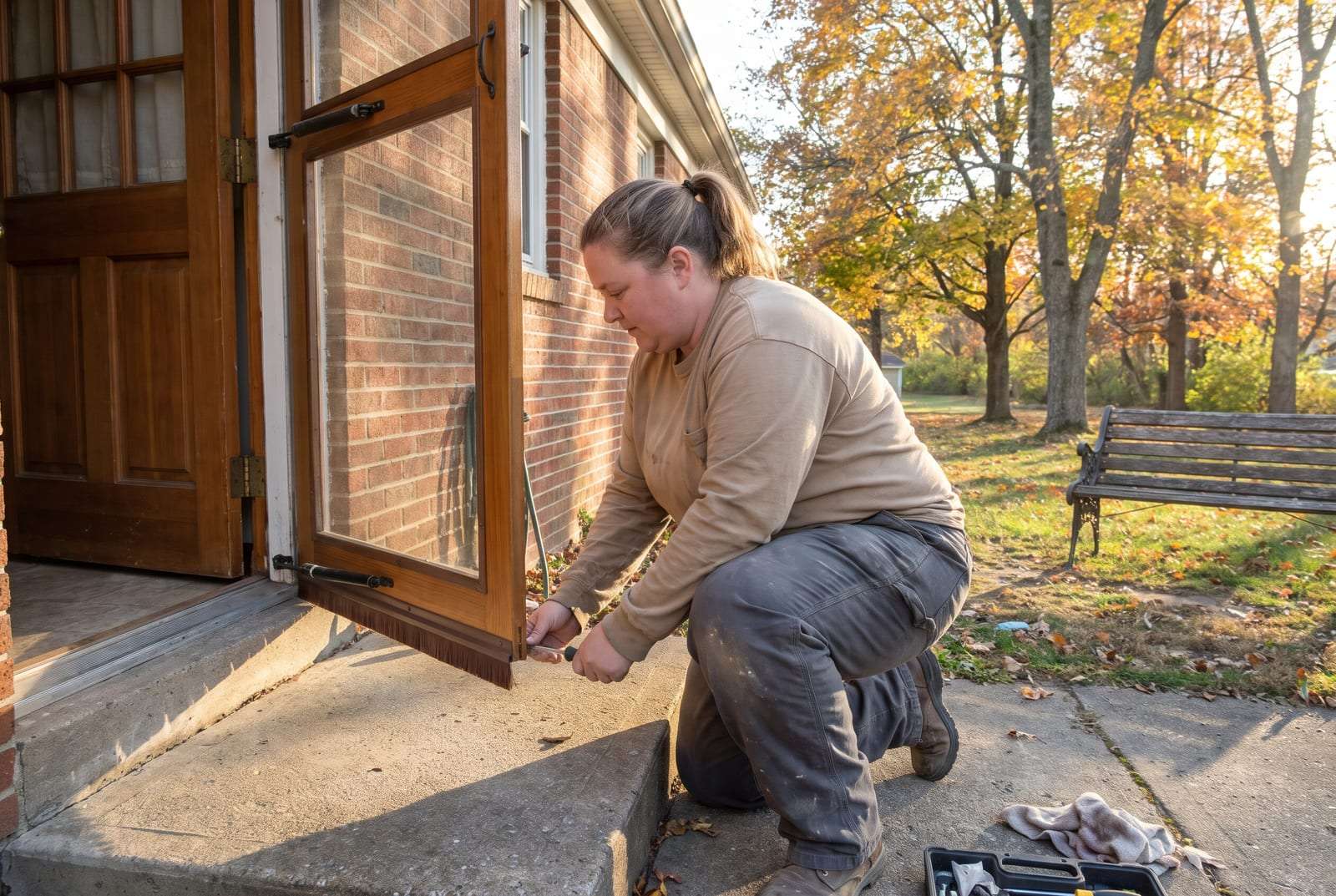
Close the Gap Under Every Outside Door
Daylight under an exterior door is an open invitation. A brush or rubber door sweep closes the gap, and the rubber seal along the bottom of a garage door wears out over time and needs replacing when it cracks or curls.
Seal Small Gaps With Something Mice Can’t Chew
Mice chew through foam alone, rubber and soft wood. For small gaps around vents and the sill, pack in steel wool or copper mesh before the sealant goes on, and cover larger openings with hardware cloth.
Stack Firewood Away From the House
A woodpile against the wall is shelter for mice, spiders and ants, right beside a way in. Stack firewood off the ground and away from the house, and bring in only what you’ll burn in a day or two.
Move Seed and Pet Food Into Sealed Bins
Bird seed, grass seed and dry pet food in the garage or basement are a winter’s supply for mice. Move them into metal or heavy plastic bins with tight lids before the cold arrives.
Winter: Roaches, Bed Bugs and Holiday Boxes
Michigan’s cold sends most outdoor insects into hiding, but the pests already inside stay busy all winter. Holiday travel and visiting guests are a common way for bed bugs to arrive, and they’re far easier to deal with when they’re caught early.
Check the Bed After Trips and Guests
After a trip, unpack on a hard floor rather than the bed and run clothes through a hot dryer. After guests leave, look along the mattress seams and the headboard with a flashlight for small dark spots, shed skins or live bugs.
Look Behind the Warm Appliances
Cockroaches stay close to warmth and water in winter: behind the fridge, under the stove, around the water heater and the dishwasher. Pull appliances out now and then to clean behind them, and check those spots for specks like ground pepper.
Open Stored Boxes in the Garage
Boxes of decorations that spent the year in the basement or the garage can hold a mouse nest, spider egg sacs or roaches. Open them in the garage or outside, and swap cardboard for plastic bins when you pack them away again.
Write Down What You Hear at Night
Mice are most active after dark, and winter is when scratching in a wall or ceiling is easiest to hear. Note the room, the wall and the time. It helps pin down where they travel and where they got in.
When the Season Gets Ahead of You
Tips go a long way, but they won’t clear a nest inside a wall or a colony that has already settled in. If you’d like to talk through what you’re seeing, call us at (313) 351-0267, or Schedule a Visit and we’ll walk the property with you.